Yemeni Troops Kill 7 Protesters in Sana’a

Yemeni President Ali Abdullah Saleh has promised to leave his country for the United States, hours after security forces loyal to him shot and killed nine opposition protesters taking part in a giant march to the presidential compound.

In a news conference Saturday, Mr. Saleh said he will travel to the United States in the “coming days” to “get away” from media attention and allow the country's unity government to prepare for a February election to replace him. He also vowed to return to Yemen to pursue political work as an opposition figure. Mr. Saleh did not give any dates for his planned travels.

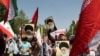
Earlier Saturday, Yemeni troops opened fire to stop the march by tens of thousands of anti-government activists who reached Sana'a after a four-day journey from the city of Taiz, 270 kilometers to the south. Soldiers and police also fired tear gas and used water cannon to block the marchers in the southern part of the capital. Medics say more than 200 people were wounded, many by gunfire.

Many Sana'a residents joined the arriving protesters, who want Mr. Saleh to stand trial for the killings of hundreds of activists during the government's efforts to suppress 10 months of opposition demonstrations.

Mr. Saleh has responded to the protests by agreeing to end his 33-year presidency after the February election — a deal backed by Gulf nations and Yemen's ruling and opposition parties. The agreement calls for all parties to back his deputy as the sole candidate in the election. Mr. Saleh also would be granted immunity from prosecution.

Many activists in Saturday's march chanted, “No immunity for Saleh.”

Meanwhile, Yemeni officials say unidentified gunmen killed a British citizen of Yemeni origin and wounded a security officer in a shooting on an oil company vehicle in the southern province of Hadramout on Saturday. One official blamed the attack on highway robbers.

Yemeni Troops Kill 7 Protesters in Sana’a

Yemeni government forces in Sana'a have shot and killed at least seven opposition protesters participating in a giant march to the compound of Yemeni President Ali Abdullah Saleh.

Witnesses and medics say Yemeni troops opened fire to stop the march by tens of thousands of anti-government activists who reached Sana'a on Saturday, after a four-day journey from the city of Taiz, 270 kilometers to the south. Thirty or more protesters were wounded. Soldiers and police also fired tear gas and used water cannon to block marchers south of the capital.

Many residents of Sana'a joined the arriving protesters, who want Mr. Saleh to stand trial for the killings of hundreds of activists during the government's efforts to suppress 10 months of opposition demonstrations.

Mr. Saleh has responded to the protests by agreeing to end his 33-year presidency after a February presidential election – a deal backed by Gulf nations and Yemen's ruling and opposition parties. Mr. Saleh also would be granted immunity from prosecution, and the agreement calls for all parties to back his deputy as the sole candidate in the election.

Many activists in Saturday's march chanted, “No immunity for Saleh.”

Meanwhile, Yemeni officials say unidentified gunmen killed British citizen of Yemeni origin and wounded a security officer in a shooting on a vehicle in the southern province of Hadramout on Saturday. One official blamed the attack on highway robbers.

UN Envoy Says Yemen Faces Huge Challenges

The United Nations' envoy to Yemen says the transitional government faces the huge challenge of wresting control over parts of the country from al-Qaida.

Jamal Benomar told the Security Council Wednesday that the situation in Yemen is highly fragile, with a number of areas in the hands of government opponents, including al-Qaida.

Benomar said the political agreement that saw President Ali Abdullah Saleh hand over power to his opposition-backed deputy will fail without the cooperation of all political leaders. He says he wants to see a Yemen where the streets belong to the people and not those with arms.

President Saleh agreed last month to give up power to Vice President Abd-Rabbu Mansour Hadi, leading the way to a new presidential election set for February 21st.

Benomar said Wednesday Mr. Saleh will soon go to a foreign country for what he calls “serious” medical treatment. The envoy gave no other details. Mr. Saleh was seriously burned in a rocket attack on the presidential palace in June, sparking street battles and an uprising against his government.

Yemen Swears In National Unity Govt.

Yemen's national unity government was sworn in in the capital, Sana'a, Saturday as part of a deal for the country's embattled president to step down after nearly a year of anti-government protests that have killed hundreds.

The new 35-member Cabinet is headed by veteran opposition politician Mohammed Basindwa. The ministerial posts are equally divided between President Saleh's party and the opposition with the aim of steering Yemen toward presidential elections scheduled for February. Saleh loyalists will run the ministries of defense, foreign affairs and oil, while the opposition will head the ministries of interior, finance and information.

During the ceremony, Vice President Abd al-Rabuh Mansur Hadi urged the Cabinet to forget their political differences and focus on major issues. The state-run SABA news agency quoted Mr. Hadi as saying the government's first task was to create an “atmosphere” where reconciliation could take place.

The United Nations Secretary General Ban Ki-moon welcomed the swearing in of Yemen's new government. He urged all sides “to work toward the full implementation of an inclusive Yemeni-led transition process, giving all Yemenis a true stake in the country's future.”

Yemen is also home to al-Qaida in the Arabian peninsula and the new government is tasked with ridding Yemen of al-Qaida-linked militants who are attempting to gain a stronghold in the country's south. Military officials said Saturday clashes in the southern Abyan province between government troops and suspected militants killed two soldiers and 11 militants.

Yemen’s VP Calls for United Cabinet

Yemen's vice president has urged members of the new unity government to forget their political differences and focus on major issues.

Abd al-Rabuh Mansur Hadi made the plea on Saturday, shortly after the new government was officially sworn in during a ceremony in the capital, Sana'a.

According to the state-run SABA news agency, he also said the government's first task was to create an “atmosphere” where reconciliation could take place.

The country's new 35-member Cabinet is headed by veteran politician Mohammed Basindwa. The ministerial posts are equally divided between President Saleh's party and the opposition. Mr. Basindwa is from the opposition.

Saturday's swearing-in brings Yemen one step closer to a government without President Ali Abdullah Saleh, who has faced months of opposition protests.

The government is also trying to rid Yemen of al-Qaida linked militants who are attempting to gain a stronghold in the country's south. Officials said Saturday that two soldiers and 11 suspected militants were killed during clashes in the southern Abyan province.

The Gulf-sponsored reconciliation plan allows Mr. Saleh to remain president in an honorary capacity until presidential elections are held in February.

Saleh loyalists will run the ministries of defense, foreign affairs and oil, while the opposition will head the ministries of interior, finance and information.

Yemen Gets Unity Government

Yemen's new unity government is in place, tasked with guiding the volatile country toward a critical presidential election in February.

The state-run Saba news agency said the unity government was officially sworn-in Saturday in the capital, Sanaa. The Reuters news agency reports the new government then met for the first time, chaired by Yemeni Vice President Abd al-Rabuh Mansur Hadi.

The new 35-member Cabinet itself is being headed by veteran politician Mohammed Basindwa. The ministerial posts are equally divided between President Ali Abdullah Saleh's party and the opposition. Mr. Basindwa is from the opposition.

Saleh loyalists will run the ministries of defense, foreign affairs and oil, while the opposition will head the ministries of interior, finance and information.

Saturday's swearing-in brings Yeminis one step closer to ridding themselves of President Saleh, who ruled for 33 years. Even though Mr. Saleh is no longer running the government, the deal sponsored by Gulf nations allows him to remain president in an honorary capacity until the election.

Despite the deal removing Mr. Saleh from power, thousands of Yemenis have been taking to the streets in the capital to express their displeasure with the deal. Many say it was wrong for Mr. Saleh to be granted immunity.

Hundreds of people have died since Yemenis first started pushing for a change earlier this year. Many protesters say they want Mr. Saleh to stand trial in Yemen for possible crimes.

Yemeni VP Forms New Unity Government as Fighting Rages

Yemeni Vice President Abd al-Rabuh Mansur Hadi issued a decree Wednesday to set up a national unity government to transfer power from loyalists of embattled President Ali Abdullah Saleh and prepare for presidential elections.

The decree approves the formation of a new 35-member Cabinet headed by veteran politician Mohammed Basindwa. The ministerial posts are equally divided between President Ali Abdullah Saleh's party and the opposition. Mr. Basindwa is from the opposition.

Saleh loyalists will run the ministries of defense, foreign affairs and oil, while the opposition will head the ministries of interior, finance and information.

The creation of a national unity government was stipulated under the Gulf-sponsored agreement signed by Mr. Saleh last month to transfer power to his deputy as part of a transition to democracy.

Meanwhile, fighting between opposition forces and government troops raged on the streets of the capital, Sana'a, Wednesday. Witnesses said one person was killed and at least four others wounded in army shelling near government buildings in the city's center.

President Saleh was in power for 33 years. His time in office will officially end in February when Yemenis go to the polls to elect his successor. The Gulf plan agreed to by Mr. Saleh and Yemen's main political parties allows him to remain president in an honorary capacity until that election.

Yemen VP Forms New Unity Government

Yemen's state news agency reports that Vice President Abd al-Rabuh Mansur Hadi has set up a unity government to transfer power from loyalists of embattled President Ali Abdullah Saleh.

The Saba agency says the vice president issued a decree approving formation of the government headed by newly-appointed Prime Minister Mohammed Basindwa, who is from the opposition.

The creation of a national unity government was stipulated under the Gulf-sponsored agreement signed by President Ali Abdullah Saleh last month to transfer power to his deputy as part of a transition to democracy.

The Cabinet will be equally divided between Mr. Saleh's supporters and the opposition. Saleh loyalists will run the ministries of defense, foreign affairs and oil, while the opposition will head the ministries of interior, finance and information.

Mr. Saleh's 33 years in power will officially end in February when Yemenis go to the polls to elect a new president. The Gulf plan agreed to by Mr. Saleh and Yemen's main political parties allows him to remain president in an honorary capacity until that election.

Yemeni Government Forces Shell Taiz

Shells and mortar fire rained down on the Yemeni city of Taiz on Thursday, killing five people and wounding at least 20.

Residents of several Taiz neighborhoods said government forces launched the attack early in the day. Medical officials confirmed the death toll and said some of those wounded were in critical condition.

Taiz residents have been protesting for several months, pushing for President Ali Abdullah Saleh to step down. Mr. Saleh and Yemen's main political parties agreed earlier this month to a Gulf-sponsored plan for transferring power to his vice president and holding an early presidential election.

Earlier this week, Mr. Saleh announced a general amnesty for all those who “committed errors” during the country's 10-month political crisis. Mr. Saleh said the only exception to the amnesty would be those involved in an apparent attempt to assassinate him back in June.

The Gulf-sponsored plan allows for Mr. Saleh to remain president in an honorary capacity until the February 21 presidential election.

Yemen Names New PM as Continued Violence Kills 24

Yemen's Vice President Abd al-Rab Mansur al-Hadi has named opposition leader Mohammed Basindwa as the new prime minister.

The country's official Saba news agency said Sunday Basindwa is to form a new national unity government under the Gulf-sponsored agreement signed by President Ali Abdullah Saleh in the Saudi capital, Riyadh, last week to transfer power to his deputy as part of a transition to democracy.

Earlier in the day, Mr. Saleh announced a general amnesty for all those who “committed errors” during the 10-month political crisis, “except those involved in crimes or the June 3 bomb attack on his compound in Sana'a in an apparent assassination attempt.” The president suffered serious injuries that forced him to seek medical treatment in Saudi Arabia.

Vice President Hadi also declared February 21, 2012 as the date for a presidential election to formally end Mr. Saleh's 33 years in power. The Gulf plan agreed to by Mr. Saleh and Yemen's main political parties allows him to remain president in an honorary capacity until that election.

In violence Sunday, Yemeni security and tribal sources said Shi'ite rebels attacked a Sunni Islamist school and other sites in the northern province of Saada, killing at least 24 people and wounding about 50 others.

A provincial security official and local Sunnis told foreign news agencies that the Shi'ite Zaidi rebels known as Houthis shelled Sunni targets in the town of Damaj. They say the targets included the school run by the Sunni Islamist Salafi sect.

The Shi'ite Zaidi sect dominates the Saada region and sees the Salafis as a threat. Militants from both sides have fought each other in recent weeks, prompting local tribesmen to try to secure a truce.

Houthi rebels led an uprising against the Yemeni government in the country's north for years before both sides agreed to a truce last year.

Calendar

June 2013
M T W T F S S
« Jan    
 12
3456789
10111213141516
17181920212223
24252627282930

Archives

Categories

VOA Blogs